Free Guide: The 5-Day Metabolism Reset
A no-BS plan to wake up your slow metabolism. Designed for adults 40+. Delivered as a PDF in under a minute.
🧮 First: Calculate Your Metabolic Age
Free 60-second calculator. Get personalized recommendations based on your age, body comp, sleep, and activity.
You used to eat whatever you wanted without thinking twice. Pizza on Friday, pancakes on Sunday, and the scale barely moved. But somewhere around 40, everything changed. The pounds started creeping on. Your energy dipped. And that old trick of “just eating less for a few days” stopped working.
If this sounds familiar, you are not alone. Millions of adults over 40 notice their metabolism slowing down, and it can feel frustrating and confusing. The good news? Science has clear answers about why this happens. Even better, there are real, proven ways to fight back.
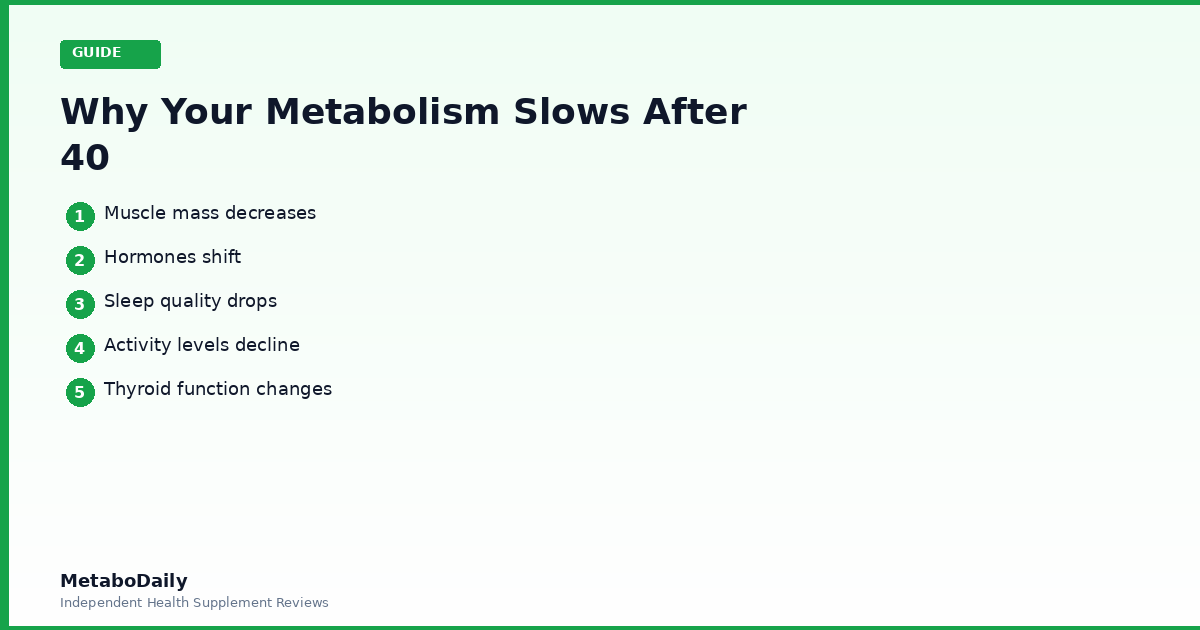
In this guide, we will walk through the five main reasons your metabolism slows after 40 and then share practical solutions you can start using today.
What Is Metabolism, Really?
Before we dive in, let us clear up what metabolism actually means. Your metabolism is the process your body uses to turn food into energy. It includes every chemical reaction that keeps you alive, from breathing to digesting food to repairing cells.
Your basal metabolic rate (BMR) is the number of calories your body burns just to stay alive while at rest. This accounts for about 60 to 75 percent of all the calories you burn each day. The rest comes from physical activity and digesting food.
When people say their metabolism is “slow,” they usually mean their body is burning fewer calories than it used to. And after 40, that is exactly what starts to happen for several well-documented reasons.
5 Scientific Reasons Your Metabolism Slows After 40
1. You Are Losing Muscle Mass (Sarcopenia)
This is the biggest factor, and most people do not even realize it is happening. Starting around age 30, adults begin losing muscle mass at a rate of about 3 to 8 percent per decade. After 40, this process speeds up significantly.
Why does this matter for metabolism? Muscle tissue is metabolically active. That means it burns calories even when you are sitting on the couch or sleeping. Fat tissue, on the other hand, burns very little energy at rest.
Research published in the Journal of Clinical Endocrinology & Metabolism shows that each pound of muscle burns roughly 6 to 7 calories per day at rest, compared to just 2 calories per pound of fat. So as you lose muscle and gain fat, your body naturally burns fewer calories throughout the day.
This process is called sarcopenia, and it is one of the most important yet overlooked reasons behind midlife weight gain.
2. Hormonal Changes Are Working Against You
Your hormones go through major shifts after 40, and these changes directly affect how your body processes and stores energy.
For women: Estrogen and progesterone levels begin to decline during perimenopause, which often starts in the early to mid-40s. Lower estrogen is linked to increased fat storage, especially around the belly. It also affects insulin sensitivity, making it harder for your body to regulate blood sugar efficiently.
For men: Testosterone levels drop by about 1 to 2 percent per year after age 30. By 40, this decline becomes noticeable. Lower testosterone leads to reduced muscle mass, increased body fat, and lower overall energy expenditure.
These hormonal shifts create a perfect storm that makes your metabolism less efficient than it was in your 20s and 30s.
3. Your Thyroid May Be Underperforming
Your thyroid gland is a small, butterfly-shaped organ in your neck, and it acts as your body’s metabolic thermostat. It produces hormones (T3 and T4) that control how fast or slow your metabolism runs.
After 40, thyroid function can decline. Subclinical hypothyroidism, a mild underperformance of the thyroid, becomes more common with age. According to the American Thyroid Association, about 1 in 8 women will develop a thyroid disorder during their lifetime, with risk increasing significantly after 40.
Symptoms of a sluggish thyroid often overlap with “normal aging” complaints: fatigue, weight gain, feeling cold, dry skin, and brain fog. Many people chalk these up to getting older when a simple blood test could reveal a treatable thyroid issue.
Even if your thyroid is still within the “normal” range, it may not be performing at the level it did when you were younger.
4. Your Sleep Quality Is Declining
Sleep is one of the most underrated factors in metabolism, and sleep quality tends to get worse after 40. Research from the National Sleep Foundation shows that adults over 40 spend less time in deep sleep (slow-wave sleep), which is the most restorative phase.
Poor sleep disrupts two key hunger hormones:
- Leptin (the hormone that tells you to stop eating) decreases
- Ghrelin (the hormone that makes you feel hungry) increases
A study from the University of Chicago found that people who slept only 5.5 hours per night burned significantly less fat than those who slept 8.5 hours, even when eating the same number of calories.
Beyond hormones, poor sleep raises cortisol levels. Chronically high cortisol encourages your body to store fat, especially visceral fat around your midsection. It also breaks down muscle tissue, which circles back to the muscle loss problem we discussed earlier.
5. Your Daily Activity Level Has Dropped
Most of us move far less at 40 than we did at 20. This is not always about formal exercise. It is about something researchers call NEAT, which stands for Non-Exercise Activity Thermogenesis.
NEAT includes all the calories you burn through daily movement that is not intentional exercise. Walking to the store, taking the stairs, fidgeting, playing with your kids, doing yard work. These small movements add up to hundreds of calories per day.
As careers advance, many people spend more time sitting at desks. Kids grow up and need less chasing after. Joints might ache, so you take the elevator instead of the stairs. Research from the Mayo Clinic shows that differences in NEAT can account for up to 2,000 calories per day between individuals. Even a modest decline in daily movement after 40 can lead to gradual weight gain.
How Much Does Metabolism Actually Slow Down?
Here is some surprisingly good news. A landmark study published in Science in 2021 challenged the old belief that metabolism crashes in middle age. Researchers analyzed data from over 6,400 people and found that metabolism stays fairly stable between ages 20 and 60, declining only about 0.7 percent per year.
So if your metabolism is not falling off a cliff, why does weight gain feel so dramatic after 40? Because the factors we just discussed compound over time. A little less muscle here, slightly worse sleep there, less daily movement, and hormonal changes all stack on top of each other.
The result feels like a sudden slowdown, but it is actually the accumulation of small changes over many years. That is encouraging, because it means small, consistent improvements can make a real difference.
Practical Solutions to Rev Up Your Metabolism After 40

Now for the part you have been waiting for. Here are evidence-based strategies to counteract metabolic slowdown and feel more energetic at any age.
Prioritize Strength Training
If you do only one thing on this list, make it this. Strength training is the single most effective way to fight age-related muscle loss and keep your metabolism running strong.
You do not need to become a bodybuilder. Research shows that two to three sessions per week of moderate resistance training is enough to preserve and even build muscle after 40. Focus on compound movements like squats, deadlifts, rows, and presses that work multiple muscle groups at once.
A study in the Journal of Applied Physiology found that adults who did consistent resistance training increased their resting metabolic rate by about 7 percent. That might sound small, but it translates to burning an extra 100 or more calories per day without any additional effort.
Eat Enough Protein
Many adults over 40 do not eat enough protein, and this is a problem for metabolism. Protein has the highest thermic effect of any macronutrient, meaning your body burns more calories digesting protein than it does digesting carbs or fat.
Aim for 0.7 to 1 gram of protein per pound of body weight daily. Spread it across meals rather than loading up at dinner. Good sources include lean meats, fish, eggs, Greek yogurt, legumes, and protein supplements if needed.
Protein also helps you feel full longer, which naturally reduces overeating without willpower-draining calorie counting.
Fix Your Sleep
Improving sleep quality can have a surprising impact on metabolism. Here are practical steps:
- Keep a consistent sleep and wake time, even on weekends
- Make your bedroom cool (65 to 68 degrees Fahrenheit is ideal)
- Stop screens at least 30 minutes before bed
- Limit caffeine after 2 PM
- Consider magnesium supplements, which can improve sleep quality in older adults
If you suspect a sleep disorder like sleep apnea (common after 40), talk to your doctor. Treating it can lead to meaningful improvements in energy, weight management, and metabolic health.
Increase Daily Movement
Remember NEAT? You can boost your daily calorie burn without setting foot in a gym. Try these habits:
- Take a 10 to 15 minute walk after each meal (this also helps blood sugar control)
- Set a timer to stand and stretch every hour during desk work
- Park farther away from store entrances
- Take phone calls while walking
- Do household chores with more energy and intention
These small changes can add 200 to 400 extra calories of daily burn, adding up to meaningful results over weeks and months.
Consider Targeted Supplements
While no supplement replaces good nutrition and exercise, certain ingredients have solid research supporting their role in metabolic health. Green tea extract, for example, contains catechins and caffeine that have been shown in multiple studies to modestly increase metabolic rate and fat oxidation.
Chromium can help with blood sugar regulation. L-carnitine supports the body’s ability to convert fat into energy. And green coffee bean extract contains chlorogenic acid, which may influence how the body handles blood sugar and fat storage.
One product that combines several of these research-backed ingredients is Java Burn, a tasteless powder designed to be mixed with your morning coffee. It includes green tea extract, chromium, L-carnitine, and other metabolism-supporting nutrients. If you are curious, you can read our full Java Burn review for a detailed breakdown of the formula. It is not a magic fix, but for people already working on the lifestyle factors above, it may provide an additional edge.
For a broader look at what is available, check out our guide to the best metabolism boosters currently on the market.
Get Your Hormones and Thyroid Checked
If you have been doing everything right and still struggling, it is worth getting bloodwork done. Ask your doctor to check:
- Thyroid panel (TSH, free T3, free T4)
- Testosterone (for men) or estrogen and progesterone (for women)
- Fasting insulin and blood glucose
- Vitamin D (low levels are linked to metabolic issues)
Sometimes a metabolic slowdown has a medical component that lifestyle changes alone cannot fully address. Identifying and treating these issues can be the missing piece of the puzzle.
Manage Stress Intentionally
Chronic stress keeps cortisol elevated, which promotes fat storage and muscle breakdown. After 40, many people juggle peak career demands, aging parents, and financial pressures. All of this stress has a real effect on your metabolism.
Evidence-based stress management techniques include:
- Regular physical activity (which does double duty for metabolism)
- Meditation or deep breathing exercises (even 10 minutes daily helps)
- Spending time outdoors in nature
- Maintaining social connections
- Setting boundaries around work hours
A Realistic Timeline for Results

Let us set honest expectations. You will not reverse years of metabolic decline in a week. But here is what a realistic timeline looks like when you apply the strategies above consistently:
- Weeks 1 to 2: Improved energy and sleep quality
- Weeks 3 to 4: Reduced cravings and better appetite control
- Months 2 to 3: Noticeable changes in body composition and how clothes fit
- Months 4 to 6: Measurable improvements in metabolic markers, strength, and overall well-being
The key is consistency over perfection. Pick two or three strategies from this guide and commit to them for 30 days. Then build from there.
Frequently Asked Questions
At what age does metabolism slow down the most?
Metabolism does not crash at any single age. Research published in Science shows a gradual decline of about 0.7 percent per year between ages 20 and 60, with a sharper decline after 60. However, the combined effects of muscle loss, hormonal changes, reduced activity, and poorer sleep tend to become most noticeable in the 40s and 50s.
Can you actually speed up a slow metabolism after 40?
Yes, you can meaningfully increase your metabolic rate at any age. Strength training to build or maintain muscle mass is the most effective method. Combined with adequate protein, better sleep, increased daily movement, and stress management, most people can offset age-related metabolic decline significantly. You may not return to your exact metabolic rate at 25, but you can get much closer than most people realize.
How many calories does metabolism decrease per decade after 40?
The exact number varies from person to person, but research suggests the average decline is roughly 50 to 100 calories per day per decade for sedentary adults. That may not sound like much, but over a year, a 100-calorie daily deficit adds up to about 10 pounds of potential weight gain. The good news is that active adults who maintain their muscle mass experience a much smaller decline.
Does coffee help boost metabolism after 40?
Caffeine does have a mild thermogenic effect, meaning it temporarily increases the calories your body burns. Studies show caffeine can boost metabolic rate by 3 to 11 percent in the short term. However, your body builds tolerance over time, so the effect diminishes with habitual use. Pairing coffee with metabolism-supporting nutrients and maintaining muscle mass will have a larger and more lasting impact than caffeine alone.
Should I eat less or exercise more to fix a slow metabolism after 40?
Neither extreme works well. Drastically cutting calories can slow your metabolism further by triggering your body’s starvation response and accelerating muscle loss. Instead, focus on eating enough (especially protein) while increasing your activity through both structured exercise and daily movement. Strength training is particularly important because it builds metabolically active muscle tissue that keeps your calorie burn high around the clock.
The Bottom Line
A slowing metabolism after 40 is real, but it is not inevitable or irreversible. The five main culprits, muscle loss, hormonal changes, thyroid function, sleep quality, and reduced activity, are all things you can influence.
You do not need extreme diets or hours in the gym. Start with strength training and protein, fix your sleep, move more throughout the day, and get your bloodwork checked if something feels off.
Your metabolism may have changed since your 20s, but your ability to take control of your health has not. The best time to start is today.
Java Burn - Natural Metabolism Booster
- Adds to any coffee
- No lifestyle change needed
- 100% natural ingredients
- 60-day money-back guarantee
* Affiliate link. See our disclosure.